

Carya illinoinensis, “hardy pecan”
Juglandaceae
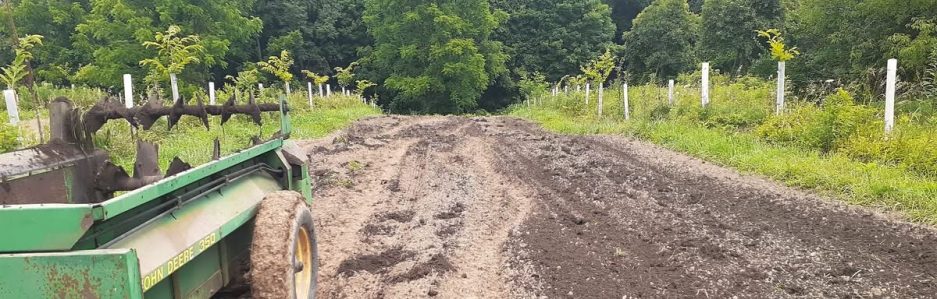
Gregory Ormsby-Mori of the University of Missouri Center for Agroforestry posing with a wild pecan tree at HARC in New Franklin, MO. Right picture is of seedlings coming up on loess-capped River Hills pasture, on top of a ridge, near the Missouri River. Dr. William Reid wrote a good piece for UMCA a few years ago on growing pecans in Missouri, you can check it out here. Mid-MO is sometimes called “Little Dixie” because of the influx of Kentuckians who initially moved into the area during colonization, and these Southerners brought their fondness for nuts (pronounced “pee cans”) with them. Boone County is near the northern edge of this plant’s productive range.
Best grown in humusy, rich, moist, well-drained soils in full sun. Difficult to transplant because of its deep taproot. It is for this reason that (according to Aaron Templemire, president of the Missouri Nut Growers Association) pecans that come up on their own in Nevada and Brunswick, MO grow faster and more reliably than planting potted seedlings. People typically top work (graft) scion wood of particular cultivars onto these wild seedlings.
There’s a great piece on Kansas pecan orchards in “Braiding Sweetgrass“.
If grown for nut production, plant at least two different varieties for best cross-pollination. Nut production can be sparse in the northern part of its growing range, particularly when spring is late and summer is cool. May be grown from seed, but it normally takes 8-10 years for a young tree to bear a nut crop.
A large deciduous lowland tree that is the largest of the hickories. It typically grows 75-100’ (infrequently to 150’) tall with a large rounded spreading crown. Trunks mature to 2-4’ in diameter. It is native from Iowa, Illinois, Indiana and Ohio south to Alabama and Mexico, being primarily found in the Mississippi River valley and the valleys of its principal tributaries. Pecan features medium green, odd-pinnate, compound leaves, with each leaf having 9-17 pointed leaflets. Leaflets range from 2-7” long. Leaves mature to yellow green in summer, eventually turning yellow brown in fall. Non-showy, monoecious greenish yellow flowers appear in April-May, the male flowers in pendulous catkins (to 4” long) and the female flowers in short spikes. Female flowers give way to sweet, edible nuts. Each nut is encased in a thin husk which splits open in four sections when ripe in fall. Pecans are an important commercial nut crop in the U.S. Most pecan commercial plantings are located in the southern U.S., from North Carolina to Florida west to Arizona and California. Many cultivars are available.
Genus name comes from the Greek word karya used for walnut trees.
Specific epithet means of Illinois, which is part of its native range.

 Paradise Ecological Services
One thought on “Carya illinoiensis”
Comments are closed.