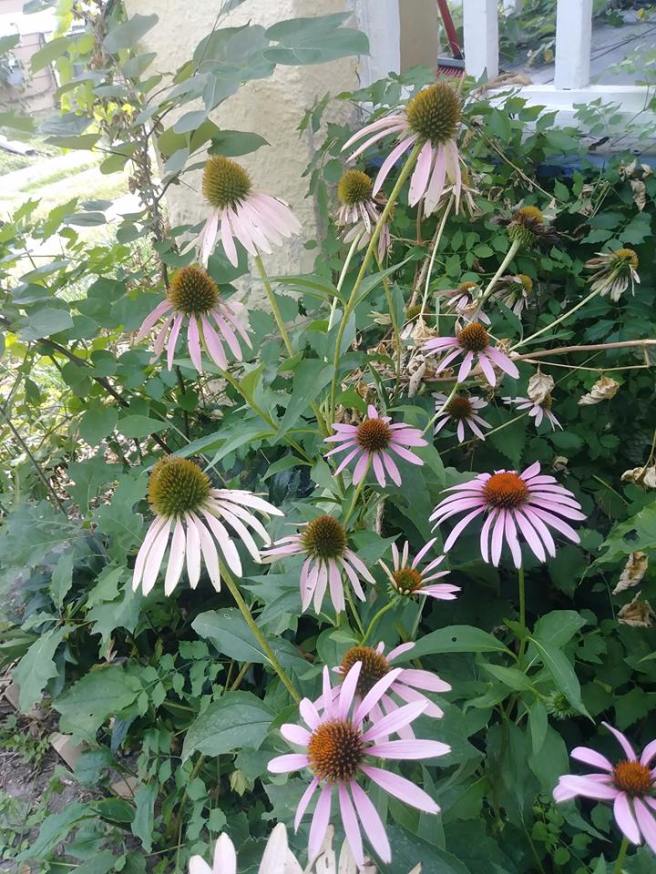
Echinacea purpurea, “eastern purple coneflower”
Asteraceae
That purple coneflower that’s growing in so many front yards (including Dan Bugnitz’s Columbia, MO yard in this picture) turns out to be one of the most popular herbal remedies in the US. It’s commonly used for Rhinovirus and influenza. It’s not at all hard to grow or maintain. It goes great in a rain garden or pollinator garden and propagates easily through root division. You can dig it up, tincture it in Everclear in the dark for 30 days and take a shot every few hours as soon as you notice your body just about to get sick (that takes some bodily self-awareness). Don’t forget to get a bunch of sleep, as well as and stopping activities that would otherwise compromise your body’s immune system!
Echinaceas are heavy phosphorous feeders and will bloom prolifically after a dormant season prescribed fire.
“While there is some controversy about which of the constituents of Echinacea contribute to the immunostimulatory activity, there is a consensus that the lipophilic alkylamides, as well as the polar caffeic acid derivative, probably make the primary contribution to the activity of alkoholic extracts by stimulating phagocytosis of polymorphonuclear neutrophyl granulocytes. In addition to these constituents, polysaccharides are implicated in the activity of the expressed juice and aquaeous extracts, and in the response to the powdered whole drug.” (VAVERKOVÁ and VAVERKOVÁ 2006)
“If the E. purpurea seeds are from a wild source (not cultivated material), a period of cold, moist stratification at 43 degrees for thirty days is recommended…. If grown from seeds, expect flowers in the second or third year. When other plants succumb to droughty conditions, echinaceas will withstand the dry weather with little attention. They do well in any average, well-drained garden soil and prefer a lightly alkaline to neutral pH. Good drainage is essential. Echinaceas do not favor highly enriched, wet soils. Full sun is preferable, though E. purpurea does well under dappled shade. Yield of up to a ton of dried root and tops per acre can be expected.” (United Plant Savers, 2013)
 Paradise Ecological Services