tl;dr: check out theses links to see Maggie Musto’s coffee bird series. Coffee birds are neotropical migratory songbirds that live on multi-strata coffee agroforestry farms in Central America during the winter. In summer, coffee birds live in Appalachian Ohio, including within and beside the multi-strata chestnut/pawpaw agroforestry happening at Woodcock Nature Preserve. As you read about coffee birds, un-mute each post and listen to their vocalizations as a mnemonic to help you identify coffee birds when you hear them. For more help, you could go on a hike of the 5K Friendship Trail at Woodcock Nature Preserve. While you’re hiking, you can use the Merlin Bird ID app to assist in identifying coffee birds. And if you found this project valuable, there are many next steps you can take. For starters, please donating to Woodcock Nature Preserve and supporting their mission. You could have a conversation about coffee birds and Bird-Friendly Coffee with other coffee enthusiasts. You could even check out a winter coffee bird tour in Costa Rica with Birding Man. Southern Ohio Chestnut Company would be happy to offer technical assistance with agroforestry design and installation to support coffee birds on your property.
20 COFFEE BIRDS OF WOODCOCK NATURE PRESERVE
Yellow-billed Cuckoo
As land manager at Woodcock Nature Preserve, I sometimes get requests to facilitate student internships. There is a surprising amount of interesting happenings going on at Woodcock, and I suppose that it’s natural that a certain percentage of college students would desire to contribute their time and talents to the project. In summer 2025, I had the pleasure of working with student intern Maggie Musto. Maggie produced a body of work that deserves to be studied and celebrated, so we’re cataloging that work here.
Maggie is a senior in communication studies at Ohio University. She was recruited by board president Nate Beail-Farkas to help Woodcock. On her own, Maggie applied for a student grant to pay her for her time, and selected Woodcock Nature Preserve to work with. But what would she do? As it turned out, my friend Ryan Dibala at Birding Man Wildlife Tours and I had been developing an environmental education story. We pitched Maggie and the board. Maggie was already thinking of making a series of social media posts, which was a good fit. We got the green light.
My pitch was to focus Maggie’s posts on the birds of Woodcock Nature Preserve. Particularly, the “coffee birds”. Coffee birds are species of migratory songbirds that live in coffee plantations during the winter months, but that come back to live and reproduce in the Midwest, Great Lakes and Appalachian regions during the summer. Both the Audubon Society and the Smithsonian have historically prioritized supporting the coffee birds’ winter habitat. Typically this has been through supporting chocolate and coffee based agroforestry in Latin America. Instead of single strata monoculture fields of chocolate and coffee, these big environmental organizations promote multi-strata agroforestry, where the smaller, shade tolerant coffee and chocolate trees/bushes are cultivated under taller trees, so that the birds can still have a place to roost and feed in the higher canopy. Overstory species in these multi-strata cacao and coffee plantations usually have secondary uses as well. Nitrogen-fixers like Inga edulis (Ice cream bean), Erythrina poeppigiana (Coral tree), and Gliricidia sepium (Quickstick) are particularly valued for low-input systems, as they reduce fertilizer needs. Timber species like Cordia alliodora (laurel) and Cedrela odorata (Spanish cedar) provide long-term income. Many of these trees also have additional specialty human uses for woodworking, charcoal making, food for humans and fodder for livestock, green fencing, and medicinal applications of different parts of the plant. As a result of the Smithsonian and Audubon Society’s work on this, many environmentalists, especially birders, are now familiar with the concept of “bird friendly coffee”. An accessible example of this is Trader Joe’s Shade Grown Espresso. Ryan reports that “It’s fantastic and relatively inexpensive for shade grown java.”
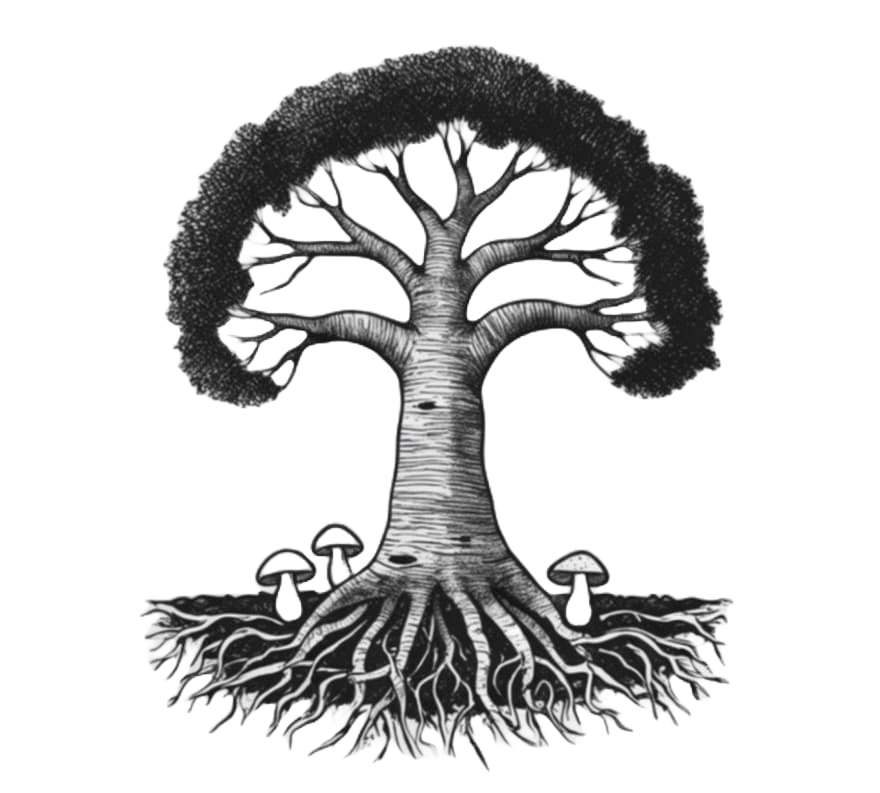
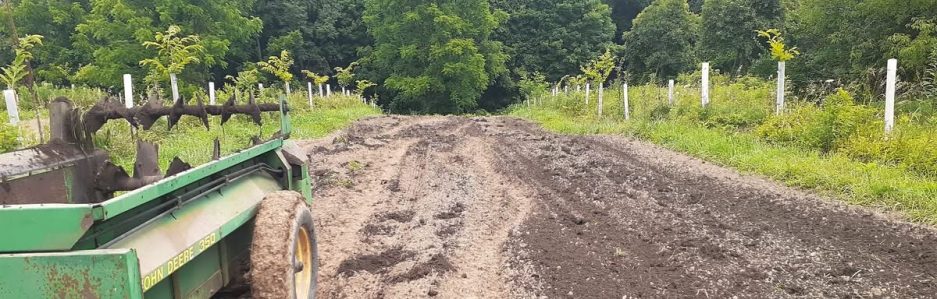
many people don’t think about is that these coffee birds actually reproduce in temperate areas, not on the tropical coffee and cacao agroforestry farms. And when the birds are at their summer home at Woodcock Nature Preserve, they’re actually living and reproducing in another multi strata agroforestry system! Southern Ohio Chestnut Company leases part of the preserve. They have recently gotten coverage in a local paper for their Chinese chestnut orchard, which is an overstory above the shade-tolerant pawpaw fruit trees in the understory. Some of these coffee birds have been directly observed nesting in the trees of this temperate agroforestry site. Isn’t that interesting?! Because of the MODUS tower that Bob Scott Placier put in place at Woodcock, we can track individual birds that make the migration annually between the shade-grown coffee plantations and chestnut agroforestry systems. If people had sufficient interest, we could specifically track the movement of these coffee birds between these tropical and temperate agroforestry sites. The way this series ties together wildlife biology and agroforestry systems, from north and south of the equator, was the hook.
Ryan helped generate a long list of coffee birds that are found at Woodcock. Ultimately, Maggie only had time to write about 20 of the coffee bird species. We feel that the coffee birds that didn’t get a post still deserve an honorable mention. So (in no particular order) here are additional coffee bird Species you can learn about: Chestnut-sided Warbler, American redstart, Tennessee Warbler, Blackpole Warbler, Blackburnian Warbler, Black and White Warbler, Nashville Warbler, Magnolia Warbler, Bay-breasted Warbler, Black-throated Green Warbler, Palm Warbler, Eastern Wood Peewee, Yellow Vireo, Red-eyed Vireo, Philadelphia Vireo, Summer Tanager, Swainson’s Thrush and the Ruby-throated Hummingbird. These species are already known from WNP, according to citizen science observations E-Bird.
Maggie used pictures from Bob Scott Placier’s long standing bird posts on social media, data from the Motus Tower at Woodcock Nature Preserve, as well as information from eBird. She reached out to Sayre Flannagan, Ron Cass, Ryan Dibala and friends, Bob Scott Placier and Susan Calhoun for anecdotes about each coffee bird. Maggie’s weekly conversations with expert birders, including these supporters and board members of Woodcock Nature Preserve, gave structure to the internship.
As a volunteer-run, donation based organization, we hoped to educate the public in a way that sets the stage for increasing our donor base. Some of our regular visitors probably already know a bit about coffee birds. But I wonder how many coffee drinkers, roasters and cafe workers would actually be quite surprised that their Bird-Friendly Coffee also requires habitat management, right here where we live. If you already buy “Bird-Friendly coffee”, maybe you would consider making a tax-deductible contribution to support the programming, infrastructure development and maintenance, and habitat management at Woodcock Nature Preserve. The organization is a local 501(c)(3) that is already providing high quality habitat to the same coffee birds that are supported by purchasing Bird-Friendly Coffee. And maybe you’d like to go on a birding tour on a coffee agroforestry Costa Rica farm with Ryan Dibala. If you do, you might see some familiar feathered faces that you learned about from hiking at Woodcock, and following us on social media.
 Paradise Ecological Services