I am increasingly studying mycoforestry, and I have been writing up a storm about this topic. Most of these writings aren’t published yet. I’m writing prescribed fire plans with mushrooms in mind. I’m writing stuff for the current SARE grant, and the next SARE grant. Some powerful ideas have emerged that I just feel like sharing. So without further ado, here’s a short excerpt from a broader Community Food Forest Management Plan, written with other people at Rising Appalachia.
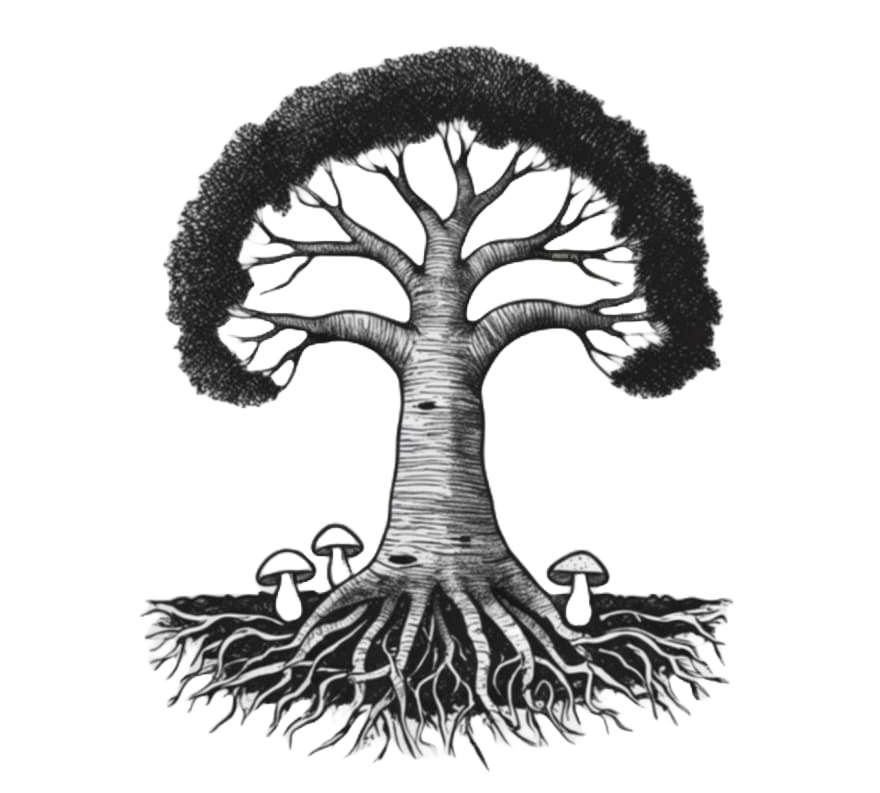
“Choice edible species of ectomycorrhizal fungi are an important layer of rural community food forests. IMHO these fungi have been almost entirely neglected in the community food forest literature. The neglect can probably be expalined by the largely urban context of this movement, and also because the ability of foresters to shift underground fungal dynamics via timber stand improvement is not widely understood by foresters in the US. But TSI that benefits conifers and Fagaceae (chestnuts, oaks, beeches) at the expense of trees like red maple, can increase mushrooms yields for a diversity of delicious edible fungi. Already in the Sugar Creek Community Forest, we have observed Smooth Chanterelle, Black Trumpet, Lilac Bolete, Indigo Milkcap, and Amethyst Deceiver- all of which are choice edible ectomycorrhizal species. These ectomycorrhizal mushrooms grow are growing on our nut trees, not confiers, as there are no conifers here. It should be noted that while there are many endomycorrhizal fungi that associate with tulip poplar, sourwood, cherry, red and sugar maples, there are no known choice edible endomycorrhizal fungi species in Ohio (or elsewhere). By steering the above-ground community towards oak-hickory dominance, and increasing the footprint of these nut trees, we plan on increasing the edible ectomycorrhizal fungal footprint. Now, there are areas where American hophornbeam, a native shrub or small tree, is present at waist height. These areas are being excluded from prescribed fire, which is generally good for the nut trees at the expense of the maples. We’re sparing the flame for the American hophornbeam because invariably dense populations of this shrub coincide with “honey holes” of heavy chanterelle production. It is thought that the American hophornbeam is the host of the chanterelles.
We aim to temper our fire intensity so as to save dead wood in in the >3” diameter size class. Some of our favorite edible mushroom species are decomposer species growing on dead wood, whether fallen logs or old stumps, so maintaining this dead wood means more decomposer mushrooms to harvest. We plan to conduct prescribed fires on days when the leaf litter will burn, but heavy down dead woody debris will mostly not burn. That allows us to support the decomposer edible mushroom species in the Community Food Forest. We observed and hope to increase yields of Oysters, Splitgills, Beafsteak, Eastern Cauliflower, Turkey Tail, American yellow morel, and Hedgehog mushrooms.
That’s the delicate balance we’re going for with our prescribed fire program at Rising Appalachia. The large down dead woody debris also provide refugia for salamanders. Fallen logs serve as microsite refugia for eastern box turtles during low-intensity prescribed fires and active-season wildfires. Rising Appalachia goes out of its way to be a turtle-friendly organization.”


