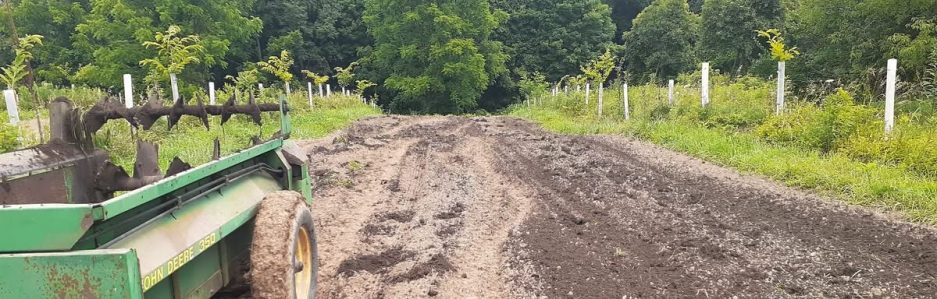
The Bee Collective teamed up with Southern Ohio Chestnut Company, and together with Route 9 Cooperative, we produced chestnut honey. Chestnut honey might seem like a red herring, because many people mistakenly assume that Castanea trees are solely wind-pollinated. However, chestnut honey is popular in multiple chestnut-producing regions around the world. With bee-keeping already being a popular agricultural pursuit in Ohio, it was only a matter of time before chestnut farmers here tried their hand at it.
If you’ve not had the pleasure of tasting chestnut honey, do yourself a favor and try some. It’s really good. I’ll quote the Honey Sommeliers over at Honey Traveler, because their description of chestnut honey is hard to beat. Chestnut honey “has a strong aromatic taste and a slightly bitter after taste. Rich in pollen content, mineral salts and tannin, with a high proportion of fructose that resists crystallization and a relatively low acidity. Dark in color, ranging from yellowish brown to almost black, sometimes with amber hues, it has an aromatic, pungent herbal aroma and taste and slightly tannic (due to the tannin in the tree). The flavor is unique, not very sweet and with an almost bitter aftertaste and very persistent, highly appreciated by those who like a strong, less sweet honey.” I would only add that while this is a description of Castanea sativa, our experience of Castanea mollissima honey is pretty much the same. It is sweet, but with a little something extra that people find interesting. While that sounds good, there are many other farm products we could focus on producing, so why explore producing chestnut honey?
Generally, Southern Ohio Chestnut Company seeks to develop agroforestry systems that center the Chinese chestnut, and build out synergistic cropping systems that go along with it. Chestnut honey fits this bill nicely, as the honeybees do not compete for resources with the trees, and in fact may increase the nut yield due to enhanced pollination rates. Chestnut honey also sells for on average about $3.50/fl oz on Amazon, about 3X the cost of normal wildflower honey. That’s $448/gallon for honey. If we can get our chestnut honey to the right market, and the market is not already saturated, at that price point there’s an opportunity here to profit.
Timeline:
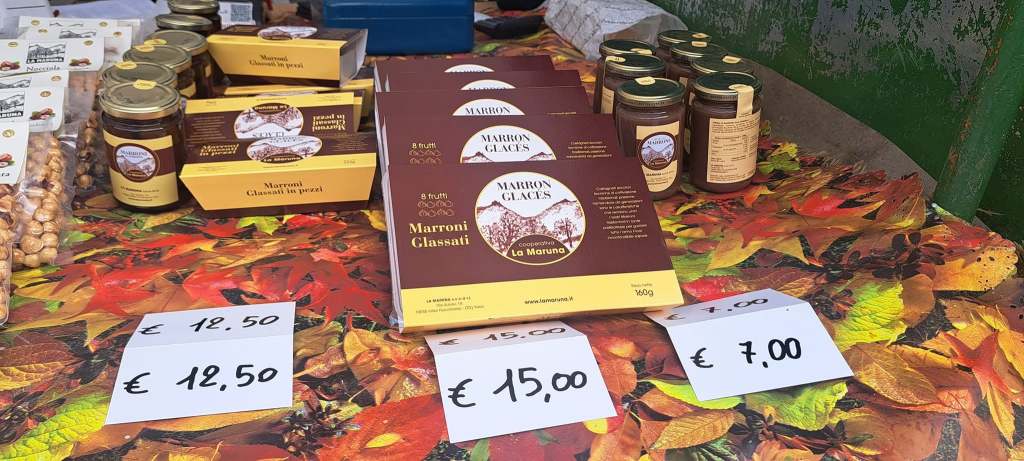
-In October 2023, Chris Smyth and Badger Johnson went to Italy to explore chestnut cultures there. In the Piedmont, we encountered the Susa Valley chestnut, as well as chestnuts in Tuscany and Sicily. While the chestnut-porcini symbiosis became a central take-away from the chestnut festival (Sagra) that we attended, we also noticed that chestnut crepes (Necci) are usually topped with the honey that bees harvest from chestnut trees. Marron Glaces, dried chestnuts, chestnut flour and chestnut butter were on-sale from La Maruna cooperative.
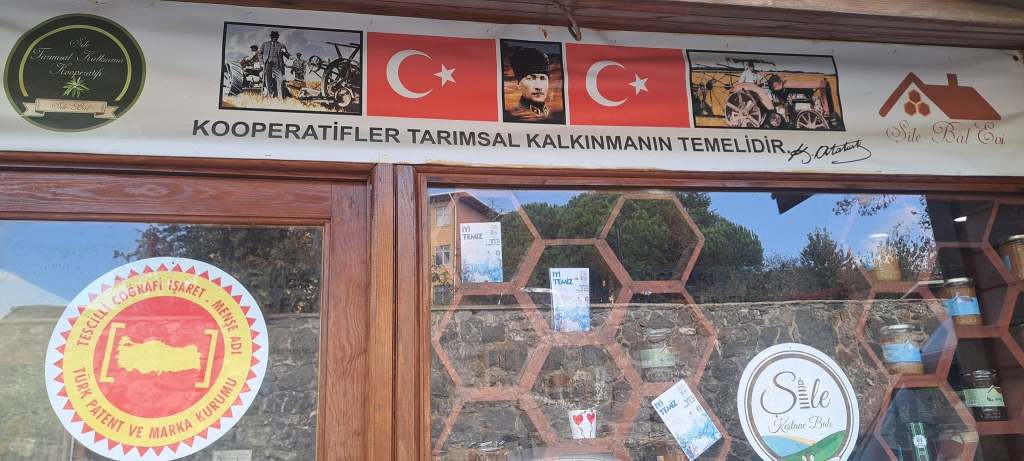
-In October 2024, we went to Türkiye to explore chestnuts there. We visited Bursa, Beydağ, Zonguldak and Şile, among other chestnut hotspots. In Şile, we tasted the region’s famous chestnut honey from a women’s cooperative there.
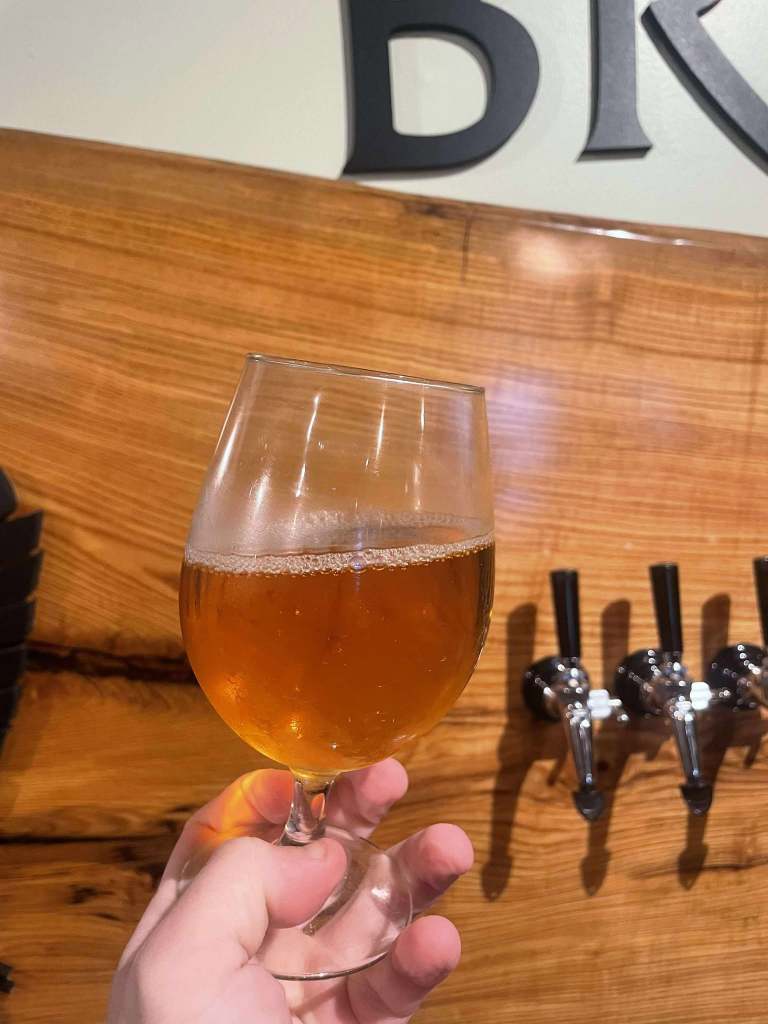
-I brought some Turkish chestnut honey back for our friend Alex Rhinehart to make mead from. He’s a professional brewer, among other things. We served the mead at Chest Fest 7, in early October 2025. Here is what Alex said about the mead: “This chestnut honey mead looks beautiful, smells outrageously good, and drinks really smooth… Recipe is super simple, will come with the bottles… It’ll end up being just under five gallons… It’s excellent. I liked the cold but found it opened up even more after warming.”
-On May 29th, 2026, Fiona Davis, Luke Howard and Badger Johnson emptied some of The Bee Collective’s frames, in preparation for taking 4 hives to Route 9 Cooperative during the pollination window. When you harvest the honey by scraping the lids off of the little cells, and putting the frames in a centrifuge, the honeycomb is easily re-useable by the bees, and they will add honey from whatever species they’re harvesting to these freshly-empty frames.
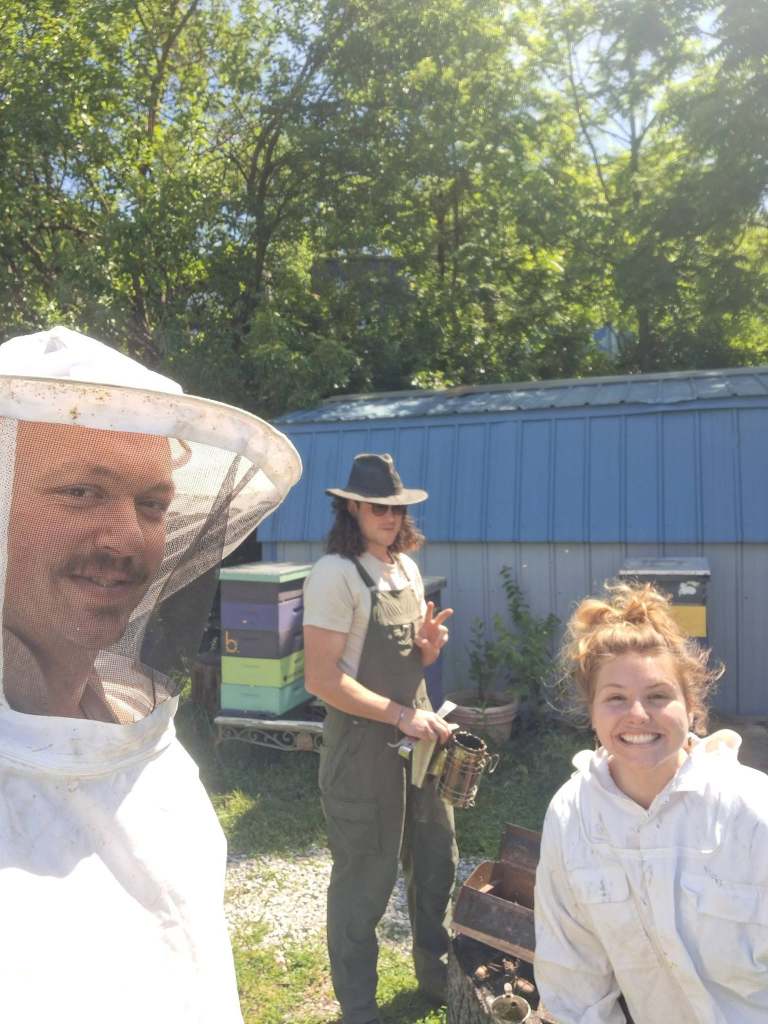
-On June 17th, 2026, we transported the hives from The Bee Collective in Franklinton (Columbus, OH) to Route 9 Cooperative (Carrollton, OH).
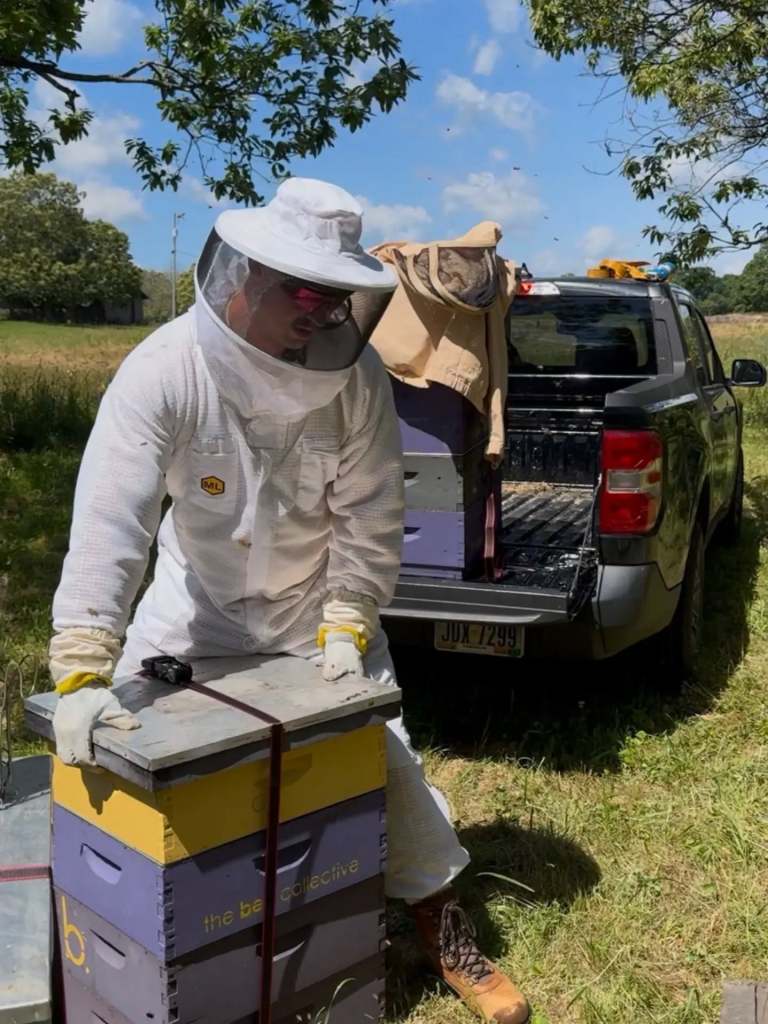
-On July 2nd (15 days later) we brought the frames back to The Bee Collective.
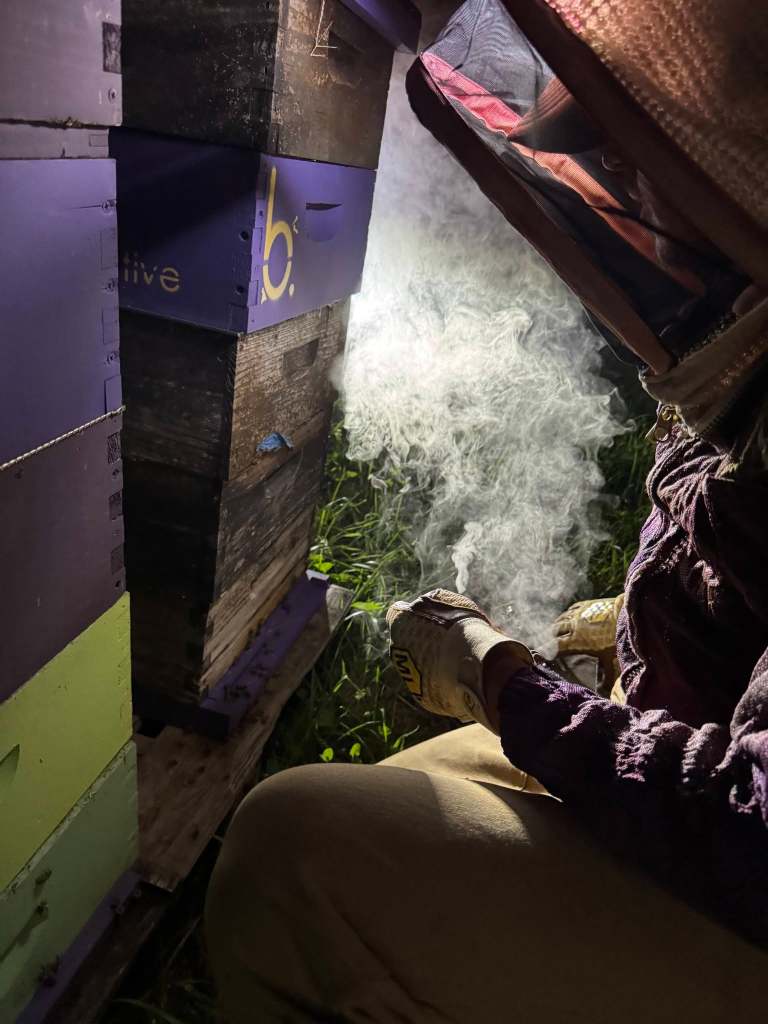
-On July 30th, we harvested the chestnut honey frames. From four fives we got about 5 gallons of honey! We had to wait a bit longer than expected, to let the bees “dry down” the honey, and cap it, as some of the chestnut honey cells weren’t capped when we checked them on July 3rd and July 15th.
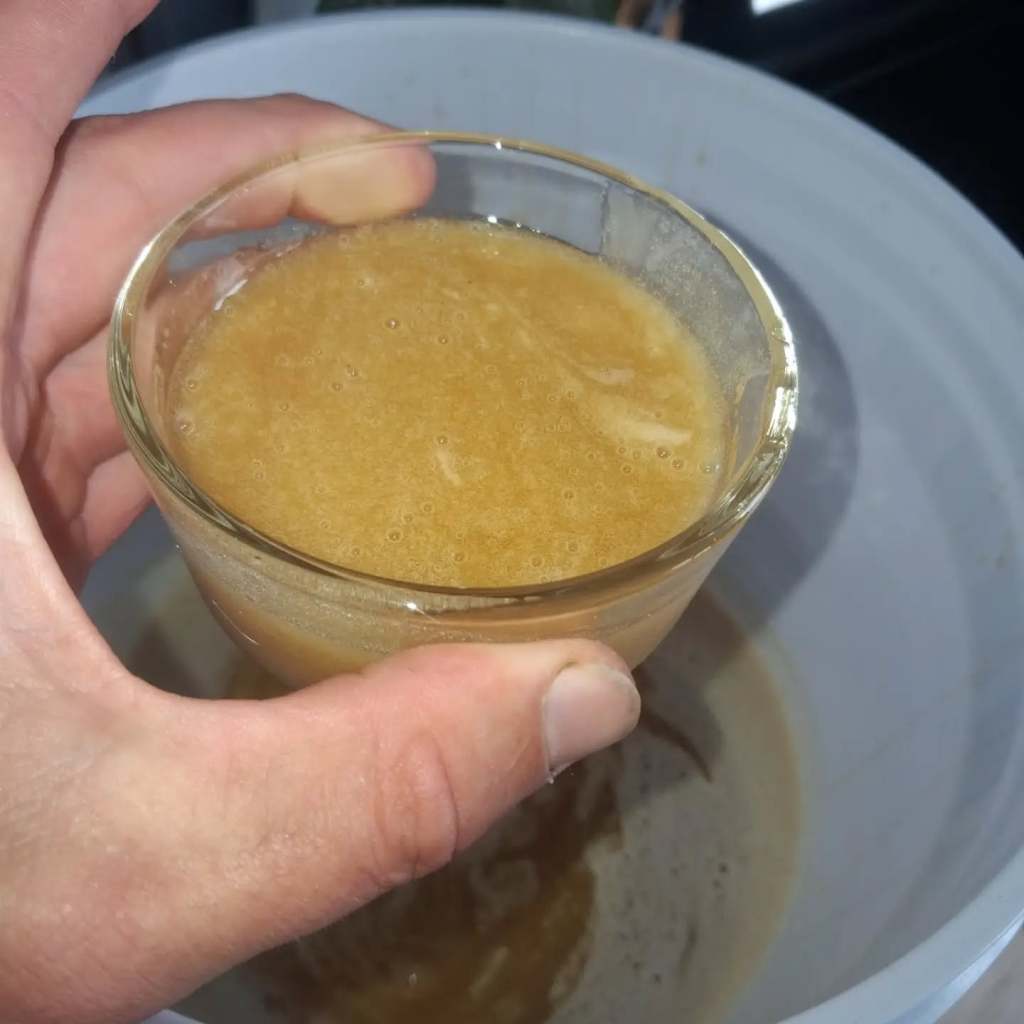
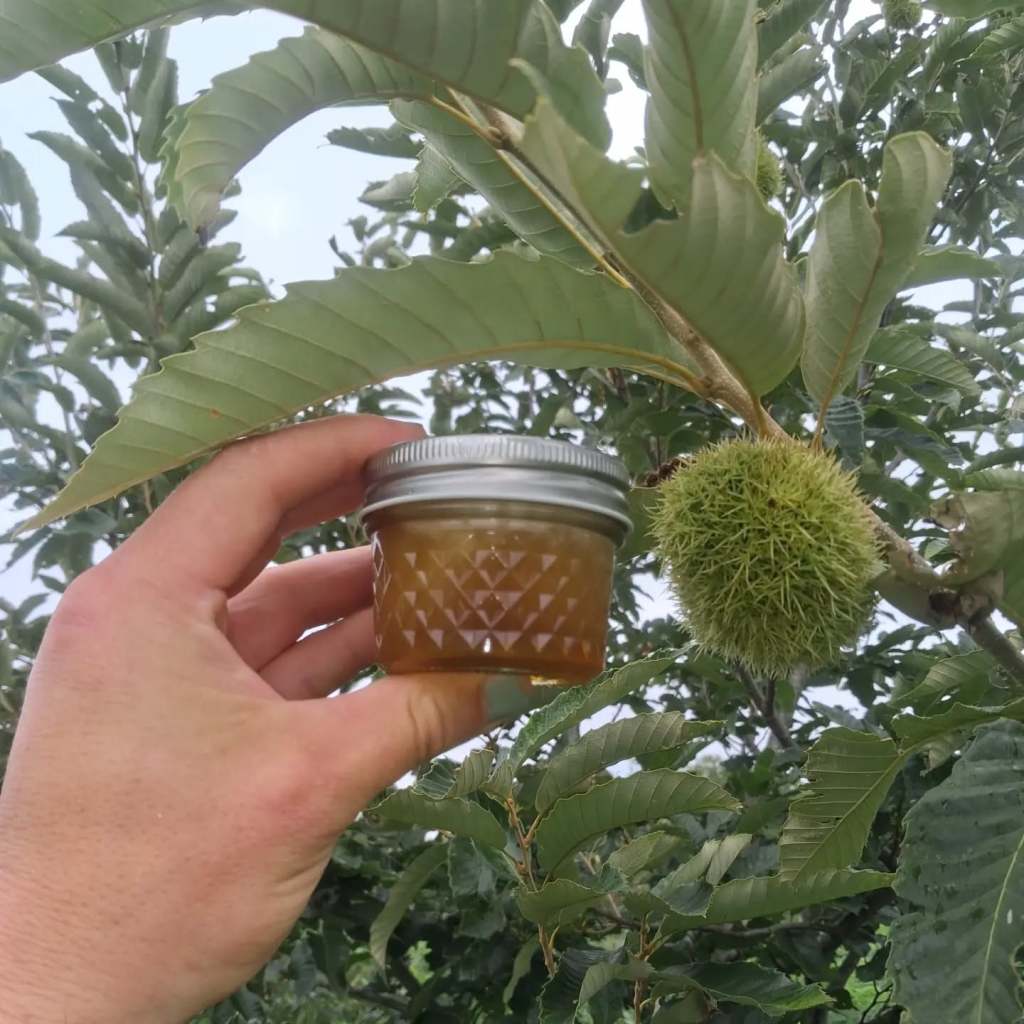
On August 26th, we sent a sample of the honey off to The Penn State Honey and Pollen Lab, to test the proportion of honey that was contributed by the chestnut to the honey. They received it on September 1st. PSU Honey & Pollen Diagnostic Lab generally has results available approximately 8-10 weeks from when samples arrive in the lab, because batching genetic samples in big groups is much more time and cost effective. Writing this down for accountability, our guess is that the honey is at least 51% from the chestnut, and also presumably clover and other things got mixed in there. You can taste the chestnuts in it, but the trees are not grown in a monoculture. https://pollinators.psu.edu/research/the-penn-state-honey-and-pollen-diagnostic-lab
Update: we got the labs back from Penn State on November 10th. Plant identification by their lab is based on what plant DNA from pollen was found in the honey. We learned two things: what plants were present in each sample, and the proportion of each plant genus present in the sequenced material from each sample. With all frames averaged together, the chestnut made up only 31% of the honey. I did notice that some frames were darker and more chestnut-dominated by taste and appearance, when we were extracting it. If we wanted true unifloral honey, we may need to harvest only those frames. But this was still chestnut-dominated honey. Here is the graph showing the major contributors.
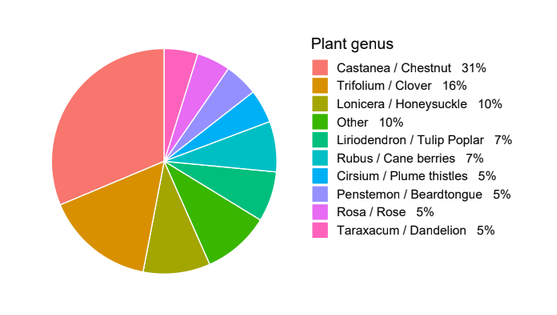
Besides these major contributors, the following minor contributors were reported:
Carduus / Thistle 2%
Magnolia / Magnolia 2%
Viburnum / Viburnum 5%
…
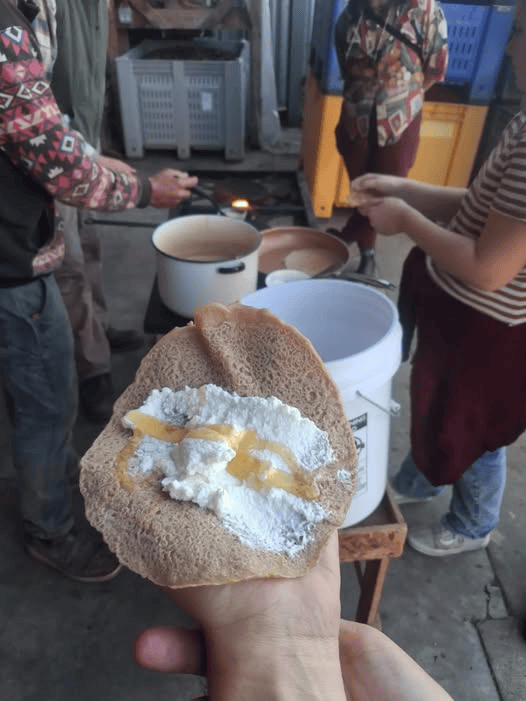
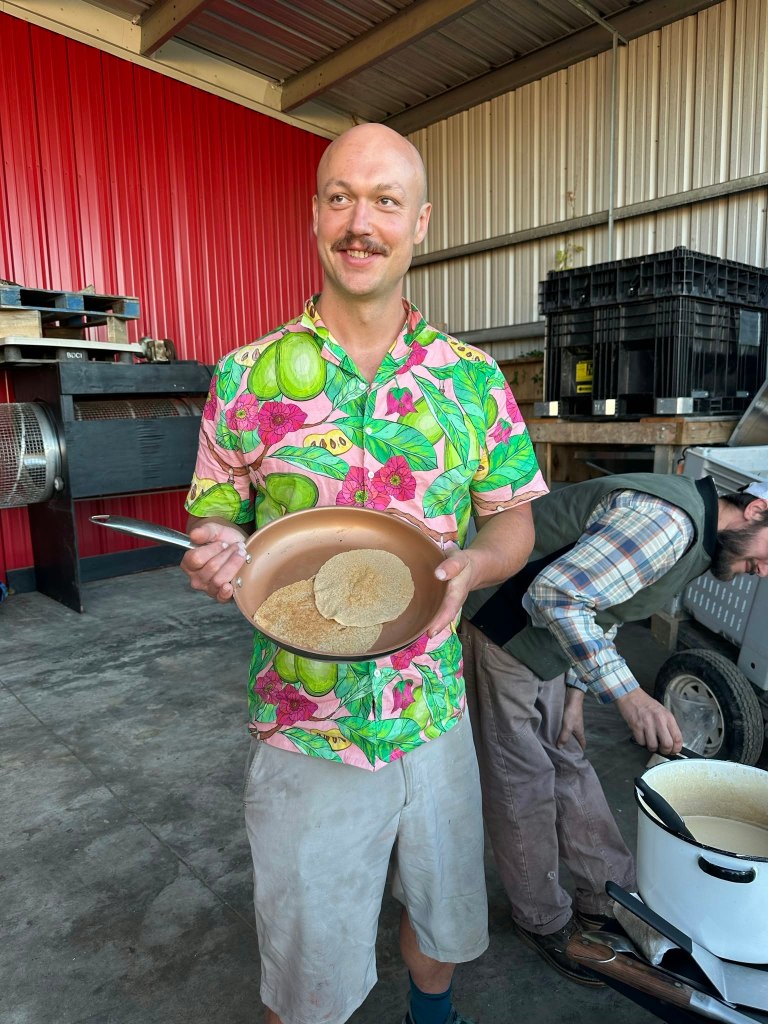
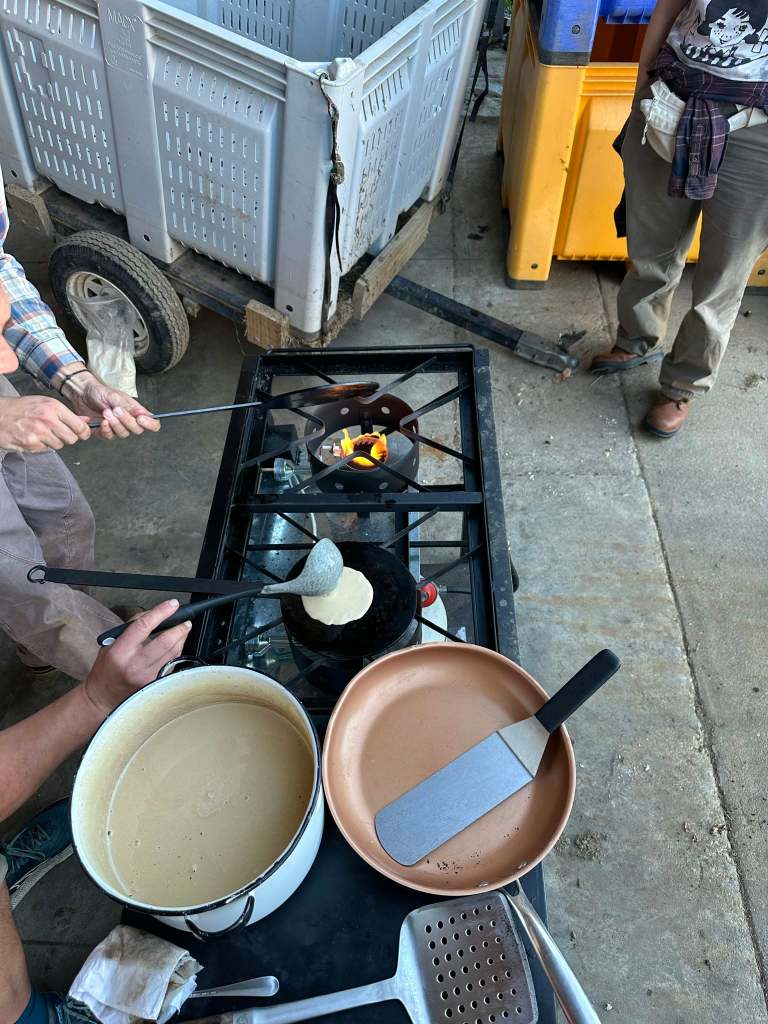
On October 3rd, we had our annual party at Route 9 Cooperative’s chestnut orchard #3. The event was called CHEST FEST 8, and we will be doing it again next year- 2027, October 1st through 3rd, if you’re reading this please get in touch if you’d like to join us, it’s our big annual rite of hospitality. Because chestnut honey is traditionally used as a drizzle on top of a ricotta-filled chestnut flour crepe, we decided to make these crepes. Chestnut flour crepes are typically just two ingredients: fine chestnut flour, and water. We added a bit of egg as a binder to our recipe, because Chinese chestnuts are not quite as pseudo-glutenous as the European chestnut is. And we added a touch of salt. 11 cups of flour, 10 cups of water, 5 eggs and 30 g of salt. It was such runny batter, and we used only about a quarter cup of batter for each necci. We used the twin necci pans over a propane burner, and it really came together great! Thanks Breadtree Farms for selling wonderful and bespoke necci pans. Don’t be discouraged if the first necci you make isn’t perfect, we figured it out pretty quickly.